Frequent collaborators with Dronelock, Ontal are a Serbian duo who have have been putting out loads of crushing industrial techno records since 2013. This is their first album stepping into the spotlight (they also put out an album with Dronelock last year called The Topics), and it delivers the goods with throbbing, dark rhythms which occasionally bring the noise but can still be mixed into a DJ set. The two collaborations, especially the blistering “Steel Forms” with rhythmic noise veteran 2nd Gen, are some of the hardest tracks here. Other tracks have short but powerful repeated melodies, such as the mysterious thumb piano-like sounds on the midtempo “Loa” or the Orbital-like notes in the thudding opener “Foray”. “Entropia” constantly sizzles with feedback, and “Spiritus Ex Machina” is calmer and has a bit more of a shake to it. “Transmigration” is busy, gritty, and breaky, and “Sojitsu” injects rivet-like beats with acid synths. “Invigorated” attacks with a buzzing, distorted d’n’b bassline, but then dissolves into space for its final 2 minutes. The album continues Ad Noiseam’s long-running tradition of bringing quality rhythmic noise and experimental techno, and although this one does have a few super intense tracks, it’s still pretty steady and accessible.
The monitors sounded terrible in the studio during this show, I couldn’t tell if it sounded that way over the air or not. I even came on the mic to apologize at one point. I guess it sounds ok, but if it doesn’t, I’m so sorry.
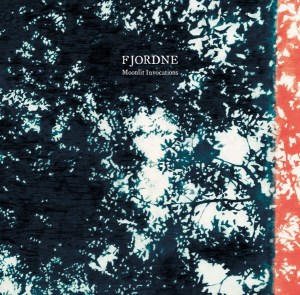
Japanese electronic producer Fjordne (Shunichiro Fujimoto) has previously been known for processing acoustic guitars and pianos into glitchy ambient tracks. This album, however, is a lot closer to jazz, mixed with experimental hip-hop/illbient production techniques. The pianos are front and center here, but there’s some slow, trippy hip-hop beats, which are often echoed and reversed. Discogs files this under “contemporary jazz”, but I think that’s stretching it. It’s pretty wonderful, though, a nice, twilight crawl through a strange but ultimately safe forest. It’s exquisitely produced, with several layers of instruments and effects which are a little messy but ultimately welcoming, and the piano and guitar melodies are upfront and the drums are slow and uncomplicated, although sometimes they’re riddled with backwards masking and other effects. “Glati” adds a clunking hip-hop beat, sax, and a thicket of voices, and “Reverends” has another laidback, jazzy hip-hop feel, with a clapping rhythm and another dense tapestry of sounds. “Coenbiac” also seems to be a drunken stumble with beats tumbling underneath the thick collage of muttering voices and reverb-heavy pianos. “Capsella” also loops some strange voices, but otherwise it’s not quite as heavily layered. “Behind Exquisite, Tragic” forgoes beats for more eerie drifting sounds, pianos, and voices. This is a remarkably original album with much depth to it, a lot to explore.
This double CD compilation is the inaugural CD release on KX, which is pretty obviously a Kompakt sub-label, although I’m not quite sure what its significance is. Other than Reinhard Voigt, all of the artists on this collection are lesser-known, but they all fit in with the shuffling, hazy Kompakt sound. The tracks are generally minimal but atmospheric, and a few have some eerie touches, like the floating vocals and spare acoustic guitar plucks on Luis Junior’s “Numina”. “Jonas Rathsman’s “New Generation” injects a bit more of a buzzing bass sound, but is an otherwise driving, slightly melancholy melodic tech-house track. “Euripides’ “The Dreamer” is a nice long dreamy breakdown-friendly track that gets a little more playful than some of the other tracks here. Krisztian Dobrocsi’s “Subwolfer” is a bit more heart-tugging, with shimmering starry synths, a crackling beat, a slightly wobbly bassline, and some clipped, tearful vocal samples. Kelly Sylvia’s “Sapphire” is closer to Kompakt’s pop side, with a few spare words calling out only when necessary, and the synths likewise creeping up over the basic beat. It seems like there’s too little going on at first, and the vocals seem like they’re going to be skip-worthy at first, but no, it all comes together really nicely. Reinhard Voigt’s contribution is simply titled “RV 01” and it seems like a pretty nondescript minimal techno track with a slightly squirming bassline, but it doesn’t seem like there’s a need for it to be anything else. Euripides’ “Melancholy Days” builds and blossoms, with triplet arpeggios and a fragile, flower-petal breakdown. It’s also not quite as sad as its title suggests. Gadi Mitrani’s “Key of Stillness” is a classic hippie-raver-girl-babbling-while-on-ecstasy track, similar to (for a recent example) Marco Shuttle’s astonishing “Sing Like a Bird” and I’m sure a ton of ’90s goa trance records that I have no interest in hearing. This one’s good though. It’s all about paying attention to the bubbles in your mind, or something. It makes you want to take out your yoga mat onto the dance floor. Even though this may be the equivalent of Kompakt’s minor leagues, it’s still a good showcase for some hidden gems.
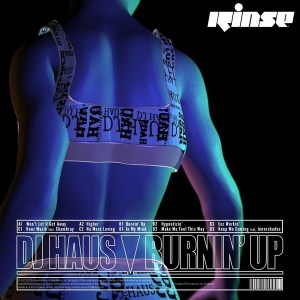
This one isn’t as generic as it looks, I swear! It was released by London dance radio station Rinse FM, and while it clearly falls under the banner of UK garage, it mixes it up a bit, with influences from early Warp bleep-n-bass groups like LFO and classic Chicago house keyboard melodies. “Won’t Let U Get Away” is early ’90s bleep with just a hint of the current bass music scene, while “Burnin’ Up” does the same for oldschool Chicago acid house. “Hypnotizin'” is a stripped down track with familiar garage house chords, and “Eez Werkin'” similarly loops whistling synths and minimal rave pianos. “Houz Muzik” is the inevitable track with cheaply sampled vocals saying the word “house” ad infinitum. “No More Loving” has some nice fat Derrick May bass tones and some more bleepy notes. “In My Mind” chops up vocals MK/Todd Edwards style, adding another jack-your-body bassline. “Acid Stringz” ends with little more than a bumping beat and a shifting acid synth line, but that’s all it needs. Sure, everything on this album has been done before in some form, many times over, but that doesn’t make these tracks any less effective.
I’m very confused, I thought Kowloon Walled City was a hardcore band. Turns out this is something different, hence the underscores in the name. This tape is on a Jersey-based label, and it seems to exist somewhere between new age and not-harsh noise, with a yoga instructor meditating around a thin veil of static. The second side has some distant, slowed-down loop that could be from a doo-wop song, joined by more shadowy singing and a rainy atmosphere. The lovely singing continues, and it’s joined by trickles of noise, and at some point some more scrambled noise just gets dumped on top. After some manipulated music box sounds, the tape gets quieter and starts to sound like it’s unspooling a bit. Then there’s some slow whispering, returning to the meditative speech of the first side, but it ends with more fragile (possibly in Japanese) singing accompanied by escalating noise. Even though the entire album is pretty short, it’s split a cross two sides of a 60 minute cassette, requiring lots of fast-forwarding (or rewinding, because it’s too short and mysterious to process on a single listen). Its Bandcamp gives it the dreaded “vaporwave” tag, but like recent, brilliant albums on Dream Catalogue by Immune and 2814, this one seems far more personal and moving than most of the jokey, groan-inducing output with foreign characters and garish artwork that’s clogging up Bandcamp.
This is the second in a trilogy of aural movies by Riggio. As expected, there is a high level of suspense and widescreen sound design. It’s definitely a lot stranger and more abrasive than a big-budget movie soundtrack would be, though, with lots of intense sound manipulation, oddly tuned acoustic sounds, and fuzz-engulfing industrial technoid beats. There’s vocals, and they even seem to be making out words, but they’re more shadowy and textural than lyrical most of the time. “TTTT” seems like the type of stock techno track that would be in an action film, except there’s instruments like clarinets poking through the buzzing, muscular synths, and other intriguing touches like that. “Elesdee” is more of a subtle, hypnotic Jon Hopkins-type track with some sighing vocals which really burrow the track in your heart. “Flying Psyche II” is a really impressive interlude of fuzzy, granular noises which I wish were expanded into a full song. “M90 To M108” is another supremely fuzzed out lurching groove with some rapidly fluctuating melodies twittering away in the corner. “Sickexcess” has a wet, slippery beat and an electrified fuzz melody, and it sounds exactly like the type of post-dubstep tracks Planet Mu was putting out back when Floating Points was on the label. “Back From Presentism” is a brief track which brings together a lot of the elements of the album: manipulated acoustic instruments (is that a koto?), reversed sounds, spooky vocals, slippery beats, and controlled distortion. The final track (“Deathobsess”) has a bit of a false ending, with a brief passage of glowing static slowly fading in before cutting off abruptly, making one wonder if that’s supposed to segue into the third album of the trilogy, whenever that surfaces.
OK, so this duo immediately attracts attention with their silly name, which is as much a play on their actual first names (Lynn and Jozef) as a goof on the piano man. Their music is really strange, inventive, and often lovely, and the novely of the group’s name pretty much disappears once the album is underway. The duo uses Fender Rhodes, Casio, effects, found objects, and ethereal vocals, creating improvised dronescapes and haunted avant-pop songs. The vocals are scattered, lost, drifting, and sometimes glitched out, but then at times they snap into focus. A few tracks have bright Rhodes chords, but then others are formless, sometimes spiced by ringing bells and other clanging objects. There’s also lots of heavy Oval-like glitching, but it feels coarse and rough, like you can actually feel the machine malfunctioning. There’s a surprising amount of bass to these drones. “A wheel in the Palm of Your Hand” has a crunchy pulse to it, and the vocals gradually go from fragmented, skipping, and sample-like to full-fledged singing. “Thaw” also starts out timid and aloof, but it eventually seems to settle into a focused mindstate (not quite a rhythm), with some vague horror movie suspense cues evident, and there’s more intense glitching at the end. “Ruben’s Tree” begins with some slowly pulsating backwards tones, and when the shadowy vocals come into focus, there’s somewhat of a Broadcast-like feel to them, before the glitch elements take over and go haywire. “I Can See You From Afar” is one of the album’s clearest, most directly emotional moments, with glistening keyboard drones and wispy vocals, which eventually dovetail into backwards effects, strange vocalese sounds, and small handheld instruments like kalimbas. These continue on “Today a Small Bird Died Due to Sadness (He Was 6 Years Old)”, picking and pulling against waving, reversing, glitching Rhodes. Final track “Dew” is calm, sorrowful, and shimmering.
This one seemed like a pretty average drone album on first listen, but the title, cover, and packaging made me listen again. The CD packaging is presented so that the amazing cover art of a joyous porch singer is framed, and there’s a unique photo inside of the booklet (mine has three women throwing snowballs in front of a house in a suburban neighborhood, probably sometime during the ’50s or so). And there’s an additional insert with a small translucent photo of a mountain and lake inside some sort of computer chip-looking thing. It has “AGFACHROME” printed on the back, Wikipedia suggests it’s some sort of film slide from the ’30s or ’40s? So, very mysterious, personal, handmade packaging. Musically, it’s three long guitar pieces with keyboard-mashed titles. They seem to consist of reversed guitar loops, and they’re actually quite prickly and rough, definitely not the type of fluffy cloud drone that these releases turn out to be sometimes, but I’ve fallen asleep to it easily a few times, so it’s definitely functional that way if you don’t turn it up too loud. But it’s really detailed and fascinating if you pay attention to it. And of course the packaging makes it feel like an artifact or a work of art, something you’d find encased in a museum.
This guy has released two tapes and an LP on NNA Tapes, and more cassettes on Opal Tapes, Orange Milk, Noumenal Loom, etc., and here’s two more from him on lesser-known labels. This album takes quite a while building up drifting, syrupy noises before the beat drops, and even when it does, there’s still a detached feel to it. There’s lots of clear-sounding, neatly arranged tones and rhythmic patterns, but it’s not straight-up dance music. It’s more like looking at rave music from another angle. The second side gets a bit more immersed in it, though, with footwork-like tempos and vocal loops, but still a bit spaced out and drizzled with synth gloop.
PHORK: Time Is The Instrument tape
His tape on the currently unstoppable Pastel Voids goes even further left field, but also further into the abstract dance zone, and it’s the most stunning of the two releases. This one has clearer 4/4 beats, but also colder, more melancholy synth pads, and longer tracks (two are almost 10 minutes), and it just takes it into a dark, hypnotic zone and stays there. “Zubu (Thbp – Fleshy Sinking Sound)” is in fact built around a weird squishing sound, and it thumps along with a sad hint of melody, before starting to hover off the ground. There’s also some playful pinging sounds and choppy vocals on some of the other tracks, so it doesn’t seem entirely lost in sadness and alienation, but even when it is, it does so in an affecting manner.




 The Answer Is In The Beat