December 23, 2018 at 1:02 pm | Posted in Reviews | Leave a comment

Nephew Lagoon: Windowood
Barely any information is to be found about this mysterious artist, although their
Bandcamp page says they’re from Ann Arbor. Most of the tracks are around a minute or two long, and they drift between eerie creaking passages and erratic beats, each functioning as a mini-scene in one larger dream sequence. Some of it seems like false starts or scattered bits of an orchestra tuning up rather than proper music, and it seems accidental if it ever stumbles on anything resembling a rhythm. Tracks like “yillow pass” and “9train” seem like reels of film scores which have started to warp and wither away.
December 18, 2018 at 6:23 pm | Posted in Reviews | Leave a comment

Ocoeur: Inner
French electronic artist Ocoeur’s fifth album is a set of wintry, minimalist ambient/IDM mainly consisting of blanket-like synths, although there’s also some piano, cello, and perhaps gongs buried underneath. It’s deep and melancholy, but it can also be relaxing. “Passage” is a mild shot of adrenaline, thanks to some flickering IDM beats, while more ambient tracks like “Mother” and “Unseen” slightly recall Vangelis at his most precious. “Echo” brings back the sculpted-static beats, then “Shelter” is a soft, comforting conclusion.
December 17, 2018 at 6:30 pm | Posted in Reviews | Leave a comment
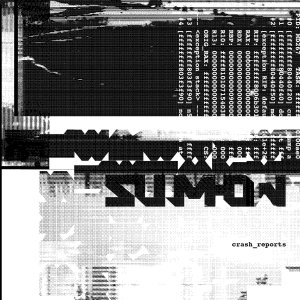
Suumhow: Crash_Reports
n5MD has been releasing electronic (and sometimes non-electronic) music informed by post-rock, shoegaze, and ambient for such a long time that it might be hard to remember when they released more abrasive IDM on a frequent basis. Actually, I’ll admit I haven’t entirely kept up with everything they’ve released. But this Suumhow album was a very pleasant surprise. It has crunchy, glitchy beats in line with Proem or Quinoline Yellow, as well as rolling drift-scapes and bright, semi-distant melodies, befitting its artwork, which suggests data overload but also includes lots of blank white space, like looking at a snowy environment. Tracks like “Phoebe” and “Small Sky” are like overpowering machines trying to probe into your head, yet you’re in such a calm, controlled space that you just go with it. Very, very impressed with this release. Also, somehow n5MD managed to release a limited amount of copies on their original format, MiniDisc, which is strange because I thought those were discontinued.
December 2, 2018 at 5:22 pm | Posted in Reviews | Leave a comment
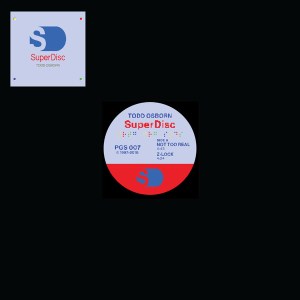
Todd Osborn: SuperDisc 12″ EP
Shigeto’s label’s newest release comes from former Crush Collision host/current Technical Equipment Supply owner Todd Osborn. First surfacing as a white label with no information, the full release is out in stores now. The first side of the record contains two electro cuts. “Not Too Real” has heavy beats, some guitar-ish melodies in the background, and a general happy-yet-subdued feel. “Z-Lock” is weirder and more Drexciyan, but also kind of spare and not super melodic. The B-side is taken up by “Ambget”, which has a slow beat and a very minimal amount of looped samples, sounding a bit closer to Gas than anything from Detroit. It was actually recorded in 1997 but it makes a lot more sense coming out now than two decades ago. Available now from
Bandcamp.
November 29, 2018 at 6:46 pm | Posted in Reviews | Leave a comment

c.Kostra: Parallel Murderverse
c.Kostra (Ryan Olcott) is behind the dreamy, tape-smudged sound of
Devata Daun‘s magnificent music. His solo material is just as woozy and trippy, but he masks his singing with vocoders and glitches, and there’s perhaps a bit more touch of Prince to the home-baked chillwave funk of his 2016 debut,
Now I Feel It. He’s released two EPs this fall, both of which are similar in tone but vastly different in mood.
Parallel Murderverse (which came out on Halloween) is the devil over his shoulder, coaxing out his darkest impulses. It’s still danceable, but it’s creepy and sinister, sort of in between twitchy electro-funk and Tobacco. The few comprehensible lyrics are paranoid and haunted, but still a bit tongue-in-cheek (just check the gleefully vicious “Psychosis On the Playground”). Throughout, ultra-compressed shoegaze guitars blare out from the carefully crafted rhythms. The EP’s final song, “Barely See Me At All”, nails an early-’80s goth/minimal wave sound, but with the producer’s ghostly vocoders intact.

c.Kostra: Parallel Partyverse
is perhaps the angel to
Murderverse‘s devil, but more accurately, it’s a surrealist party record with a heavy dose of romanticism. “Holiday Music Stream” loops found samples into a fantastically blown-out, half-melted disco jam. “It’s the Way I Feel” sounds even more scrambled, yet the sentiment is strong enough that it can’t totally be obscured. A brief snippet of a “bad take” of “Holiday Music Stream” provides a tiny behind-the-scenes glimpse of the process behind his tape-warped sound. It all ends with the squishy slow jam “Candlelight”.
November 28, 2018 at 10:35 pm | Posted in Reviews | Leave a comment

Devata Daun: Pye Luis
Devata Daun’s first album,
L o o k, was one of my favorite out-of-nowhere surprises of 2016, and one of the best lo-fi pop releases in recent memory. I wrote up a review of it for Decoder, but that site seems to be down indefinitely, so I can’t link to it, but the album is a must-hear (and a name-your-price DL on Bandcamp).
Pye Luis is the follow-up EP, and it retains the distinctive warbling-tape sound, but the vocals are clearer, and there’s more slow jams. Songs like “Mademosielle” have warped textures and haunting melodies, but an undeniable R&B/pop core. “Weakening” is just magical, and the lyrics capture that restless crush feeling. The last two songs even include saxophone, for that extra romantic touch. Also available from
Bandcamp.
November 24, 2018 at 7:24 pm | Posted in Reviews | Leave a comment

Anna Burch/Fred Thomas: split 7″
Anna and Fred both released fantastic albums this year, and they recently toured and put out this tour-only single. Anna’s side is a steady, lovely tune with lots of snowy echo over the vocals, and a general easygoing tone but typically cutting lyrics (“said a little Irish prayer, when all I wanted was for you to care”). Fred’s side is in the vein of his recent albums, pairing hooky indie rock with wordy narratives about touring, avoiding cops, and more importantly, the thoughts, feelings, and realizations surrounding all of these, eventually arriving at the point that “you could be happy”.
November 24, 2018 at 7:15 pm | Posted in Reviews | Leave a comment

Bonnie Baxter: Ask Me How Satan Started tape
Kill Alters’ Bonnie Baxter goes solo with
this astounding tape of overloaded rhythms and fractured vocals. This one builds gigantic boulders of thunderous, speaker-ripping beats, all polyrhythmic and constantly building and mutating, amalgamating juke, industrial, techno, and punk. The distortion on this album is just absolutely delicious. “Vivid” is the hair-raising centerpiece, and a glorious nightmare that I never want to end. At a couple points throughout the album, excerpts of a childhood conversation where Baxter asks her mom to, yes, “ask me how Satan started” pop up, balancing innocence with evil. The first three tracks on the second side stand alone as their own majestic hell-suite, and the tape ends with “Satan’s Angels”, a frightening yet somehow soothing collage of an evangelism broadcast, ethereal cooing, and hazy industrial droning. A very fresh, original take on rhythmic noise, and a flat-out exciting release.
November 23, 2018 at 10:06 pm | Posted in Reviews | Leave a comment

Don Fiorino/Andy Haas: American Nocturne
captures live, overdub-free improvisations between guitarist Don Fiorino and Andy Haas, who plays sax, electronics, and drum machines. Fiorino plays lap steel and “glissentar”, so there’s a slippery, fluid, weeping tone to much of his playing, and Haas often sounds like he’s playing digital tablas or scratching turntables, in addition to layering blankets of sax on the title track. There’s never a locked-in rhythm here, it all sounds fuzzy, gelatinous, and malleable. Lots of pitch-bending and flipping and stretching, yet it doesn’t sound as blasted or druggy as, say, Black Dice/Eric Copeland. Fiorino’s playing still has an earthy quality to it, sometimes veering towards country while floating closer to desert blues on the epic “Days of Jackals”. Other times, it’s more of a detached downtown skronk. The sounds contrast, but they never really feel like they’re clashing, even if they rarely seem like they’re trying to interact with each other. It’s somewhat challenging to listen to, but instead of seeming confrontational, it invites you to join in somehow, and following the individual sounds becomes an adventure.
November 23, 2018 at 9:08 pm | Posted in Reviews | Leave a comment

Shnabubula: Game Genie tape
How on earth did it take this long for Hausu Mountain to release a chiptune album?! Unless I’m forgetting something. But considering how the label’s visual aesthetic is heavily based on pixelated artwork (as well as, well, millions of other things), one might initially think they’re closely related to the chip scene. This is the first (AFAIK) cassette release from scene veteran Samuel Ascher-Weiss, who contributed to the infamous/controversial Miles Davis tribute
Kind of Bloop nearly a decade ago. This album, originally released on
Bandcamp in 2011, owes equally to 16-bit video game compositions, jazz fusion, prog-rock, and J-pop. It’s filled with complex time signatures, virtuosic playing, and an overall sense of embarking on a grand quest, but with an undying sense of optimism and glee. It is, without mincing words, a pure joy to listen to. While always sounding like it’s emanating from a vintage console, the music always bursts with excitement, and so much passion is put into the arrangements. “Aqua Fever” is the most “live”-sounding track, with acoustic-sounding drums and fluid bass soloing, while the title track is arguably the most overwhelming and complex (although really, all of this is). I must admit that even though I’ve always had an enormous amount of love and respect for the chiptune scene, I haven’t paid much attention to it since I moved from New York in 2009. This tape reissue is a reminder of how creative the scene can be at its best, and
Game Genie was entirely worth digging up and presenting to a new audience.
« Previous Page —
Next Page »
 The Answer Is In The Beat