September 29, 2013 at 12:16 am | Posted in Reviews | Leave a comment

Jar Moff: Commercial Mouth
I don’t even. There’s 500 things going on at once. I can’t see anything. I can’t follow anything. I’m getting lost really deep right now. There’s something resembling a totally crushing beat that I think I’m zoning out to but part of it feels like I’m being tricked and it’s actually something totally different. Then there’s all this free jazz sax, some explosive debris noise, and all manners of hallucinogenic smoke and mirrors. Seriously… I have no clue what is going on here. But I am totally stunned by it.
September 28, 2013 at 11:52 pm | Posted in Reviews | 1 Comment

Sugarm: Wasted: God’s Clit
I posted about the first 2 Sugarm digital EP’s on Foxy Digitalis a long time ago, and a second part of
Wasted came out and I never got around to posting about it. Both parts are on
Bandcamp, but there’s also a tape on Hard Disks as well.
God’s Clit explores dilapidated beats, flanging distortion, and abrasive drone. Opener “Achat D’or” has overblown Southern rap drum machine beats and a furious, crunchy synth pattern, ending in a blast of feedback. “Moonshine Mile” starts out quiet and ponderous, but then some sliced, hard-to-follow beats tumble in, the droning starts swooping and swarming, and it gets really confusing and awesome. “Singing Blacktop” has more convoluted drums and is doused with feedback, but then it gets quiet in the middle and a loop of mischievous laughter surfaces, along with more strange rhythms that barely make sense. “Sick Foliage” is a short, slowly growing guitar drone piece, which ends in a fog of effects that segues into “Empties In The Grass”, which ends up with a really lovely piano melody under more brittle distortion. “New Good Friend” is a more distorted cousin of the EP’s first song, but without the drum machine.

Ron Tubman/Sugarm: split tape
Sugarm’s most recent release is a split tape with Ron Tubman, as part of Hausu Mountain’s
Mugen series of splits focusing on solo live performances with no overdubs. Sugarm contributes two pieces, the first one (“500 Dollars”) using a theremin and plenty of delay and modulation, and getting pretty harsh and frightening, especially with the use of ghostly canned voices at the end. “Skinjob” is another harsh drone looper, using an old record and concentric feedback loops, and constantly sounding on the verge of combustion. Sugarm’s side is in total contrast to the Ron Tubman side, which is languid looping guitar drone, but with a healthy layer of feedback noise underneath. A few lovely atmospheric melodies surface, and there’s some wild synth oscillations during the second half of the piece.
September 28, 2013 at 6:54 pm | Posted in Reviews | Leave a comment

Plankton Wat: Drifter’s Temple
Side project of Dewey Mahood from Eternal Tapestry and Garden Sound. Droney instrumental rock, with some noodly blues-psych guitar licks, and some keyboards. Laid back and relaxed, meandering and spacious, but still focused enough to keep all the songs in a 3-6 minute time frame. A couple tracks have drums (“Nightfall”, the hand percussion on opener “Toward The Golden City”), and there’s some keyboards, but the focus is mainly on ringing, chiming acoustic guitars, as well as some blazing distorted solos. The two most different tracks are “Hash Smuggler’s Blues” (full of pulsating tremolo) and the awesome noisy finale of “Siskiyou Caverns”.
September 25, 2013 at 11:40 pm | Posted in Reviews | Leave a comment

Oneohtrix Point Never: R Plus Seven
Stepping up to the big leagues,
R Plus Seven is Daniel Lopatin’s Warp debut. Instead of being the logical sequel to 2011’s instant classic
Replica, this is a little closer to OPN’s split LP with Rene Hell from last year, using abrasive stuttering and glitch sounds, but also using plenty of preset, plastic MIDI sounds. James Ferraro has explored those sounds at length on his
Far Side Virtual album, and while I thought that album was highly overrated and gimmicky, I think Lopatin truly does some creative, unpredictable things here. Even more so than other OPN works, this album is clearly meant to be digested as a whole work (not to mention on a good soundsystem, there’s lots of bass here). Both halves of the album seem like stand-alone pieces themselves, especially given how there’s a gap of silence between the two. There’s plenty of interstitial moments that seem to cut out and instantly shift to another landscape entirely, and plenty of mutated voices (there’s a lyric sheet in the liner notes, but good luck connecting those to the actual songs). The first and last tracks end with dramatic, grandiose church organs, “Americans” cuts into gamelan-like drum passages towards the beginning and end, and “He She” is a short piece with a koto loop and simultaneous slow and fast cut-up voices (the faster ones sounding like some sort of religious chanting). These types of voices and edits continue throughout the album, with “Zebra” starting out like Fennesz’s “Before I Leave”, building with choir voices and shredded sounds, adding garage-house synth-bass and MIDI sax, pausing for a long ambient stretch, and ending up with something similar to Oval’s “Dowhile” rattling around for the last 2 minutes. “Problem Areas” is maybe the most accessible, structured track, and while I thought it just sounded like a
Far Side Virtual clone, it sounds better in context and sequence of the album. “Cryo” is a slow, unassuming, bassy intro, and then we get to the epic “Still Life”, which I think would fit in anywhere on FSOL’s double-CD opus
Lifeforms (which I’ve compared OPN’s collection
Rifts to in the past). Seriously, just listen to the last 2 minutes. There’s the “Cascade” high whistle-like synth, and some Jean-Michel Jarre type stuff going on. It’s great. “Chrome Country” ends the album with synthetic children’s choirs and pianos, plus more digital shredding and bass tones. I’d still say
Replica is OPN’s best and most accessible album so far, and I feel like this one might confuse people a little bit and potentially divide his audience, but it’s still a fantastic album, and continues Daniel Lopatin’s status as one of the most important musicians on the planet right now.
September 24, 2013 at 10:17 pm | Posted in Reviews | Leave a comment
Seams: Quarters
Slow-building techno. Except for buzzy miniature “Pocket”, all the tracks are well over 4 minutes, with a few approaching 6. Tracks take their time building up elements, but use bright melodic textures and detailed beats. “Constants” sort of reminds me of a less fractured version of Mark Fell/Sensate Focus, although it changes directions and goes into something Booka Shade might’ve done circa
Movements. “Sitcom Apartment” has some kling-klang beats and sparkly melodies, with everything coming together in the last minute. “Iceblerg” has itchy, cricket-like beats, and builds to a looped staccato melody. “Rilo” is an obvious highlight, with an alert beat and structure, and a pleasant melody. There’s also a false ending around 4:30, and the last minute or so reflects on the arpeggiating synth melody, before fading out. Overall, a fine set of jittery desktop techno.
September 22, 2013 at 11:35 pm | Posted in Reviews | Leave a comment
Hot & Cold: Border Area LP
Lo-fi post-punk duo based in Beijing, utilizing drum machine, bass guitar, vocals, and noise feedback. Kind of droney and repetitive, resembling a really stripped down, guitarless Spacemen 3 in some ways (particularly the spacey vocals on opener “Out Of The Grey”). A lot of the songs have minimal vocals, usually in the beginning of the song, and then focus on noisy electronic solos. “Uighur Pop” has a punchier drum machine sound and is punctuated by horrifying sheets of screamed vocals. “Sister Told Me” is like “Sister Ray” with a cruddy drum machine and organ instead of guitars. A few tracks, like “Red Leather Set”, have a bit of a swing to the beat. I just realized that this also sort of reminds me of The Rebel (B.R. Wallers of Country Teasers’ solo project). Just really cold and minimal and deadpan, but still in a post-punk lo-fi sort of way, not a dark, goth one.
September 22, 2013 at 10:32 pm | Posted in Reviews | Leave a comment

Zwerm: Underwater Princess Waltz
This is an album of pieces whose musical scores are contained on a single page, performed by a Dutch/Belgian guitar group called Zwerm. While that would make it seem like a lot of these pieces would be short, some of them are exercises in minimalism, similar to Terry Riley’s “In C”. Joel Ford’s “Gauss Cannon”, which opens the disc, is a good example of this, containing guitar parts which repeat, intertwine and phase, and accelerate and end up frenetic and chaotic with drums. The two Alvin Curran pieces that follow are both short, lovely, entrancing, ethereal waltzes, played gently on guitars, featuring what almost sounds like a singing saw in the background, but it’s still a guitar. The score to Nick and Leo Didkovsky’s “Mayhem” isn’t a musical one, but a drawing of a cartoonishly violent scene involving skeletons, dragons, a wizard, and lots of weapons, and the instruction to play it is to focus on one detail or line of action and attempt to musically translate it for 60 seconds, so three of the pieces on this album are skronky minute-long noise-rock pieces derived from that (with “The Arrow” surprisingly featuring banjo as lead instrument, and “The Blade” being the most METAL). Christian Wolff’s “Burdocks, Part VII” is scored with a cryptic Anthony Braxton-esque diagram, with prose instructing the players to play notes in certain orders, and the recording involves sinewaves, old radio recordings, percussion, sax, guitar feedback, and other sounds. Larry Polansky’s “tween (k-tood #2)” is another repeating, minimalist piece, which was written for piano, but is played here on guitar instead. Clinton McCallum’s “round round down” was written for Zwerm, and is a mind-melting spiralling staircase of electric guitar notes and feedback. “The Red And White Cows” begins with a spoken math problem involving different colored cows, then goes into a bluesy piece with steel string guitars, bullhorned vocals, stranges sounds and samples, and odd changes and sequences. Earle Brown’s “December 1952” is another piece with a graphic score that’s open to interpretation, so in this recording of it, we get a lovely 8 minutes of towering, spacey guitar feedback. Karl H. Berger’s “Time Goes By” has a slowcore rhythm with organ and vocals repeating the phrase “quite some times goes by” twice, subtracting the first word of that phrase and repeating it twice, and so on, and then repeating the entire sequence over and over, with slight musical variations as well, and eventually improvisations are added into the music (particularly with the percussion and guitar solos), as well as a looping system further pushing things into the vortex, stretching this one-page piece to almost 15 minutes.
September 22, 2013 at 9:43 pm | Posted in Reviews | Leave a comment
The Stranger: Watching Dead Empires In Decay
Leyland Kirby is a true hero of mine, from his pig-masked days as noise-pop terrorist V/Vm, running the pioneering V/Vm Test Records label, to his Lynchian recordings as The Caretaker, to his dark ambient works under his own name, and everything in between. The Stranger is one of his longest-running aliases (having released a limited CDr on Phthalo back in 1997), but this is only the third release under that alias. This (as far as I know) is Kirby’s first release on Modern Love, and he’s such a perfect fit on that label, considering how much of a debt artists like Demdike Stare owe to him. This is a suitably dim-lit album of dark, sometimes-rhythmic atmospherics, with clanging bells and soft beats anchoring the way on tracks like “So Pale It Shone In The Night”. “Spiral Of Decline” is the closest the album comes to a straight 4/4 beat, but you’d be hard-pressed to call it “techno”. “We Scarcely See Sunlight” has slowly tolling metallic percussion and sickly-sounding bowed instruments moaning away in the background. “Providence Or Fate” has darkly pounding drums and crackly synth-strings for a kind of poignant cinematic feel, albeit a film that’s decaying and distorted. “Where Are Our Monsters Now, Where Are Our Friends?” has a slow, mutated drum machine beat and curdled synth melodies, which sounds a bit like a cousin of V/Vm’s infamous butchering of Chris De Burgh’s “Lady In Red”. If you’re familiar with that V/Vm track, this will be a delightful flashback to that period of Kirby’s musical career, but it’s still something new and fresh and forward-looking (however wearily so). The album ends appropriately with the eerie drift of “About To Enter A Strange New Period”, which seems like a fitting proclamation for what could be a bold new era for Leyland Kirby’s always-captivating music.
September 22, 2013 at 8:44 pm | Posted in Reviews | Leave a comment
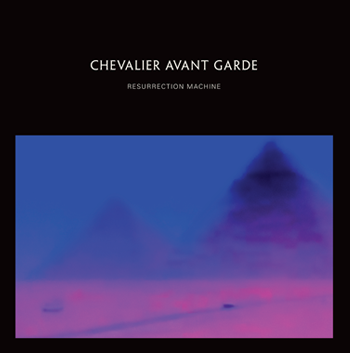
Chevalier Avant Garde: Resurrection Machine
For some reason, I was expecting this to be more coldwave/minimal-synth, and while it is some sort of dark, chilling electronic pop, the melodies remind me a bit more of early Magnetic Fields, but obviously without as sharp lyrics. The vocals are shadowy and androgynous, and there’s enough guitars to make this feel closer to indie/pop than electronic music. Lots of short, mysterious ambient interludes, which feel like weird transitional scenes (with “Return” and “Nothing Between” being odd detours into early house music). “It Was Me” starts out really obscured and ominous, but ends up with a murky 4/4 beat and plastic synths, and breaks a couple times for a piano part that sounds like that “Walking In Memphis” song. “It Makes Me Crawl” is suitably creepy and low-to-the-ground. As dark and gloomy as this album seems, there is some optimism in here, with the lyrics of “Killing Fields” admitting that “you are the comfort of my soul”, before drowning in dripping water-like synths.
September 22, 2013 at 7:20 pm | Posted in Reviews | Leave a comment
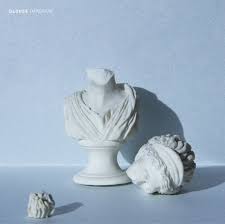
Blouse: Imperium
Second album from Portland dream-pop group. This album was a deliberate attempt to move away from the more synth-pop leaning sound of their debut; there’s no electronic instruments and some acoustic ones, including cello on a few tracks. But it still has an effects-heavy dream-pop sound and reverb-covered female vocals. Sort of like The Lost Patrol but not as much of a late-night noir feeling, and more uptempo (especially on “Eyesite” and “Arrested”). The vocals also remind me of the late Trish Keenan of Broadcast, especially on “In A Glass”. Lyrics can be pretty basic but affecting (“trust me, I’m the one who loves you”, “I’ll love you for a thousand years”). A solid, worthwhile follow-up effort.
« Previous Page —
Next Page »


 The Answer Is In The Beat